

← All topics
Topic · 6 videos
Money & Taxes
Prices, taxes, cards and inflation – where your money actually goes.

 8:58
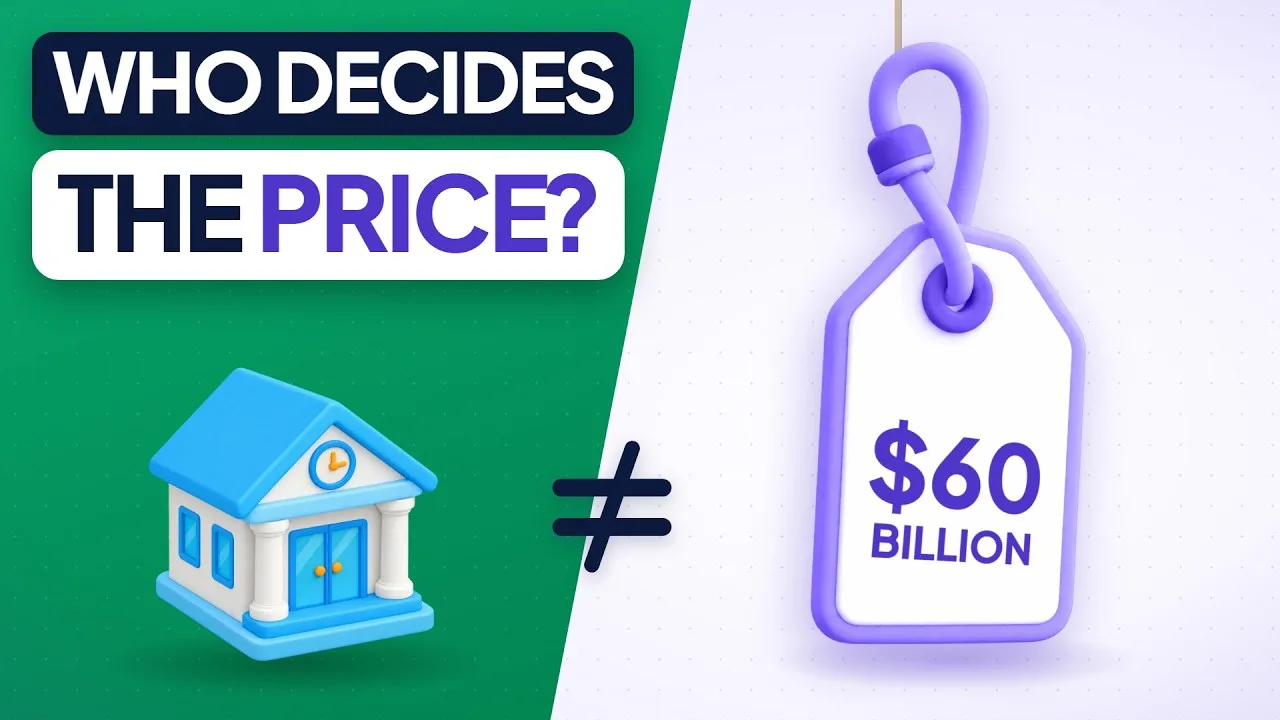
How Can a Company Be Worth $60 Billion?
What does it mean when a company is "worth $60 billion"? Did somebody pay that much? Is the money sitting in a bank account? And who decided on that number? In October 2026, Ramp announced a $60 billion valuation. To understand what a headline like that means, we follow Robo, his small invoicing-software company and one investor: $100,000 for 10% ownership, a "million-dollar valuation" – and a personal bank account that doesn't change at all. We look at revenue vs. profit vs. company value, pre-money and post-money, where investment money actually goes, why investors pay for the future, who decides the price, why private shares are hard to turn into cash, and how stock-market value can vanish without money leaving a bank account.
 Episode 37:47
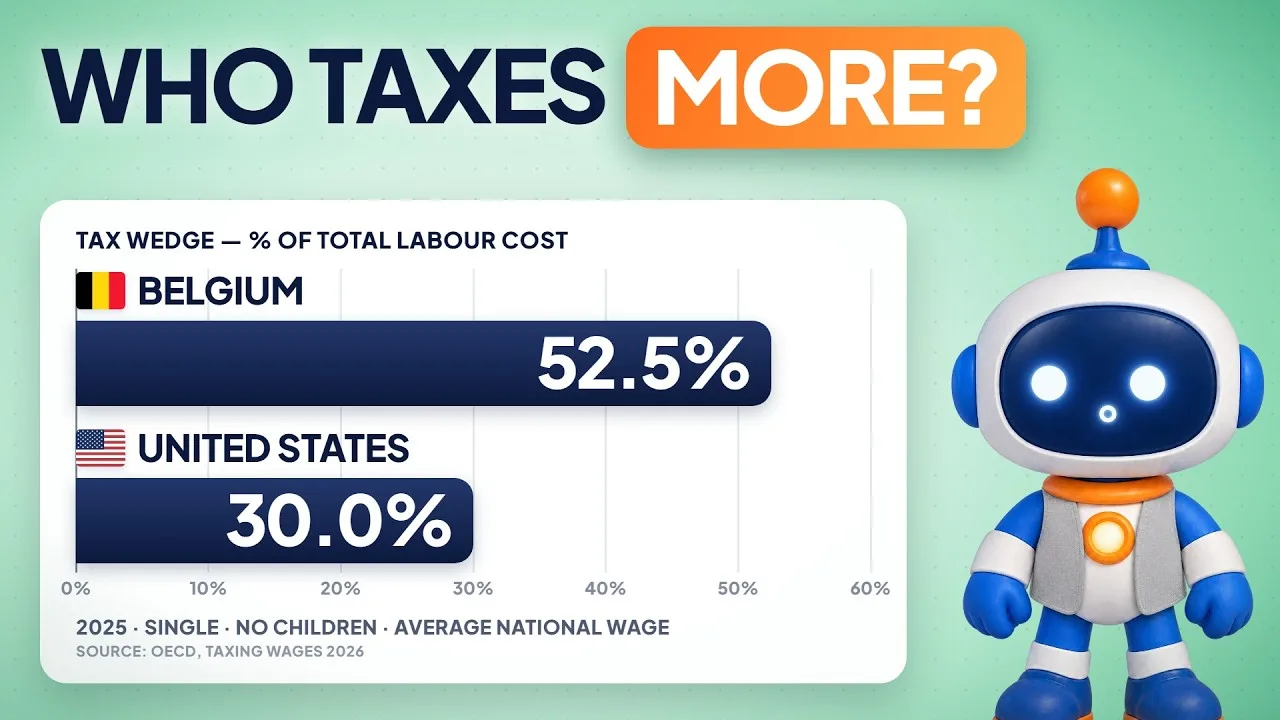
Taxes Around the World: What Happens to Your Pay?
"They take half your money in tax!" – but half of what? In episode 3 of our tax series, Robo follows the money from what a job costs an employer to what actually reaches the worker's bank account. We explain the tax wedge with a simple made-up example, compare ten OECD countries for 2025 (single worker, no children, average wage, % of total labour cost), and show why the number changes with the household, what it leaves out (like Switzerland's compulsory health-insurance premiums), what the payments fund – and why VAT and the cost of living are a separate story.
 8:05
Why Did Streaming Get So Expensive?
Remember when streaming felt cheap? In the U.S., Disney+ launched in 2019 at $6.99 a month without ads – in 2026, its ad-free price for new subscribers reached $21.49. So what happened? We follow the money: cheap prices to grow, expensive content, more and more services, the return of ads, bundles – and why streaming is starting to look a bit like cable again.
 Episode 28:15
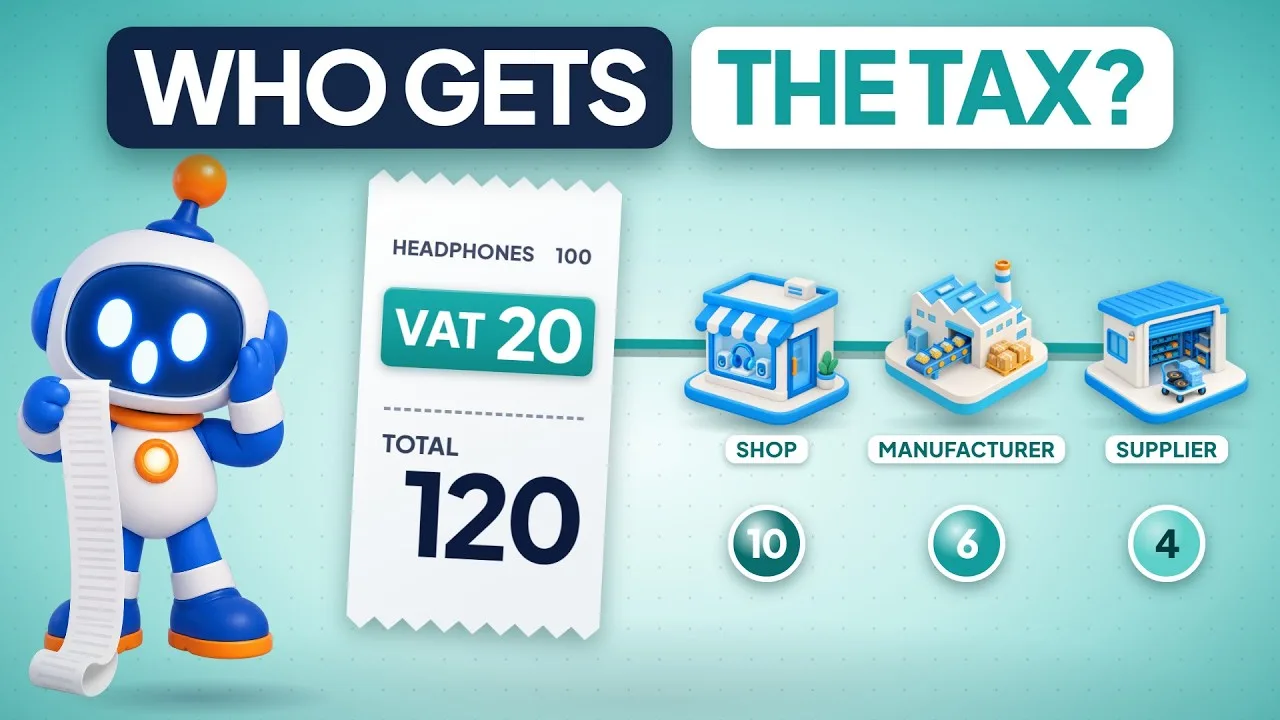
VAT Explained: Where Does the Money Actually Go?
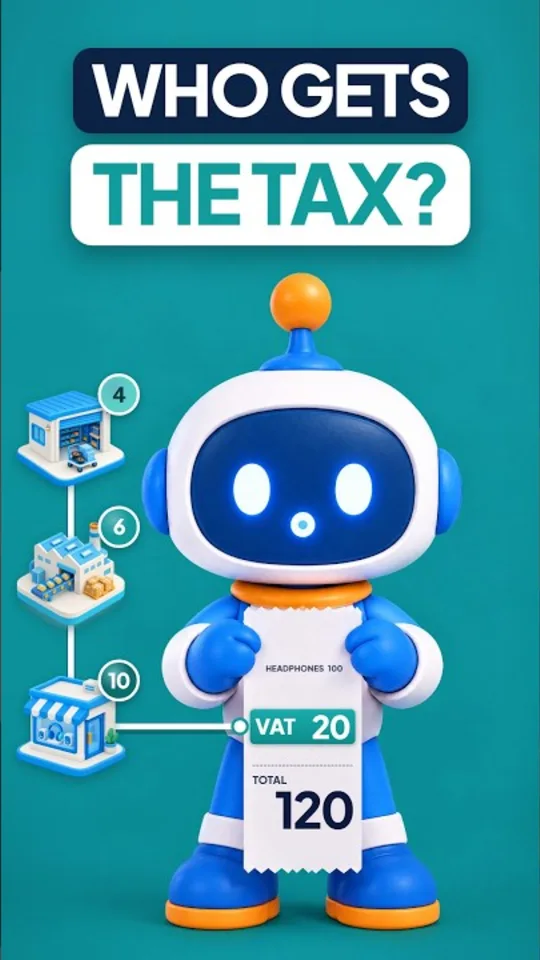
Robo pays 120 for a pair of headphones – and 20 of that is VAT. So why does the shop only send 10 to the government? Nothing has disappeared. In this episode we follow the money backwards through a parts supplier, a manufacturer and a shop, and see how VAT is collected in pieces along the way – and why the chain stops at the customer.
 Episode 19:01
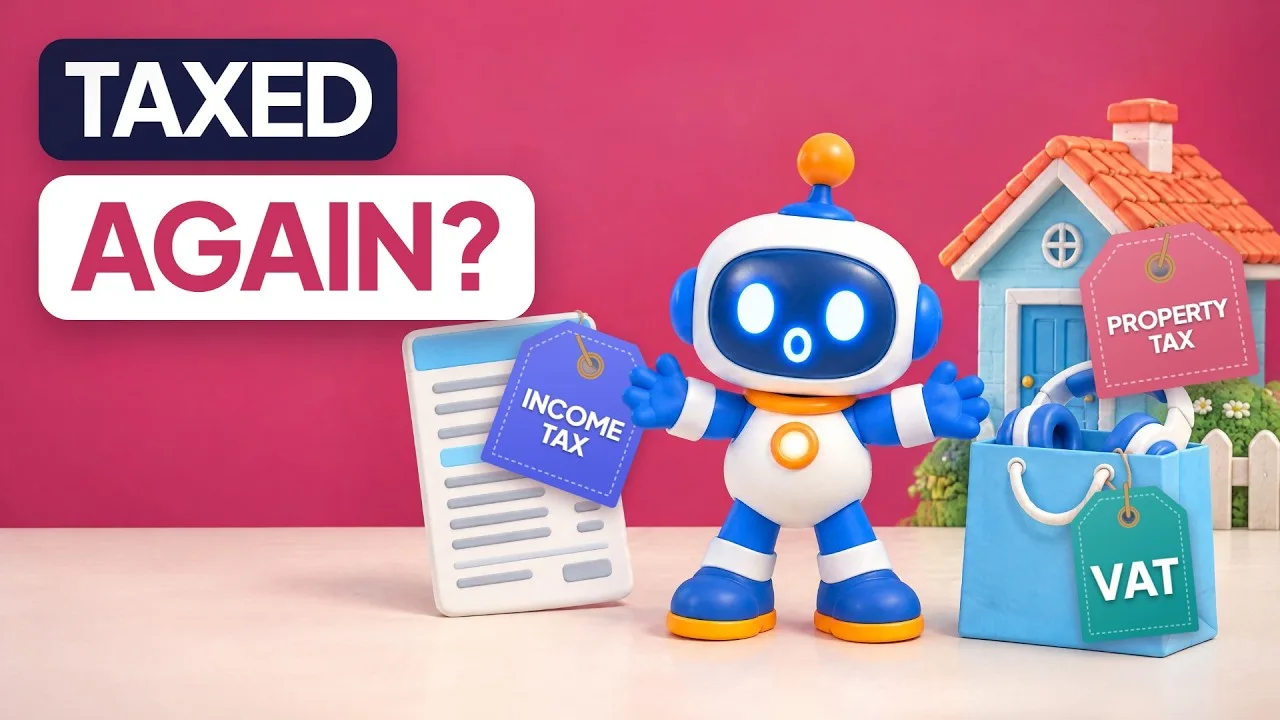
Why Do We Have So Many Different Taxes?
You earn money – taxed. You spend it – taxed again. You own a home – another bill? Follow Robo through an ordinary day and see what each tax is actually based on: income, purchases, business profits, property and transfers. Then a quick look at history (Britain 1799, France 1954, India 2017) and the side most comparisons forget: what the money pays for.
 5:37
Why Is Everything Still So Expensive?
Why is everything still so expensive, even when inflation falls? Robo uses three shopping receipts to explain lower inflation, high prices and buying power.
Shorts on Money & Taxes
 0:59
Your Company Is Worth $1 Million. Where's the Money?
 0:56
Your Salary Isn't the Whole Tax Story
 0:52
Why Is Streaming So Expensive Now?
 0:57
You Pay 20 in VAT. Why Does the Shop Send Only 10?
 0:56
Why Are There So Many Taxes?
 0:58
Why Is Everything Still So Expensive? Inflation Explained
 0:58
How Does a Credit Card Actually Work?